
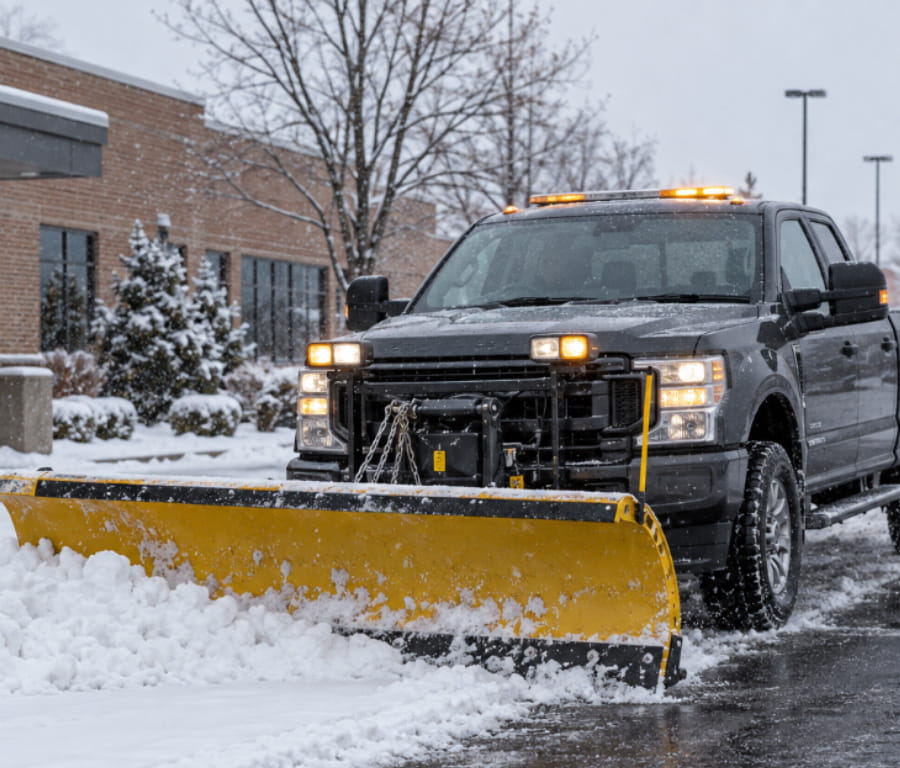
 Winter snowfalls get pretty heavy each year in Brantford, so we’ve put together this guide for this year’s falls so you can more accurately schedule your snow removal services. It lists the periods when current long-range forecasts show a greater chance of snow, cold weather, freezing rain, and flash freezing during the 2026–2027 winter.
The dates below are planning windows, not confirmed storm dates. Long-range forecasts can show when a weather pattern may become more active, but they cannot tell us the exact time or snowfall amount several months in advance. Use this guide to arrange coverage and staffing, then use daily forecasts and official weather alerts when each period gets closer.
Brantford Snow Removal Planning Dates for 2026–2027
Here are the main dates and periods Brantford business owners and property managers should put on their winter calendars.
Before November 15: Have Your Snow Removal Plan Ready
Try to have your snow removal contract, site plan, and contact list ready by November 15. Historical weather records show that Brantford normally begins receiving snow in November or December.
Before service begins:
- Confirm which parking lots, entrances, sidewalks, loading areas, and fire routes must be cleared.
- Mark curbs, islands, drains, hydrants, utility boxes, and other objects that may be hidden by snow.
- Choose safe areas where plowed snow can be piled without blocking visibility or drainage.
- Confirm the snowfall depth that triggers plowing under your contract.
- Confirm whether salting, deicing, return visits, and snow hauling are included.
- Give your snow removal company the correct after-hours contact information.
Finishing these steps before the first snowfall prevents rushed decisions when a storm is already approaching.
November 18–22: First Snow Watch
 The Old Farmer’s Almanac long-range forecast for Brantford calls for snowy and cool conditions from November 18 to 22. This should be treated as the first important readiness period of the season.
Make sure lot markers are installed and the property is clear of equipment, trailers, loose materials, and other obstacles. If employees normally park overnight, tell them where vehicles should be moved before plowing begins.
November 27–30: Flurries and Colder Weather
The same Brantford forecast calls for flurries and colder weather from November 27 to 30. Even a small snowfall can create slippery conditions when the pavement temperature drops.
During this period, be ready for spot salting and sidewalk treatment even if a full plowing visit is not required. Shaded entrances, sloped driveways, and areas near downspouts should receive extra attention.
December 1–31: Keep Coverage Active for Mixed Weather
The Weather Network expects a very mild start to the 2026–2027 winter and says December could feel like an extended fall. However, that does not mean Brantford will avoid winter weather.
The Farmers’ Almanac expects the chance of snow and mixed precipitation in eastern Canada to increase as December moves along. Southern Ontario may receive snow, sleet, freezing rain, or rain depending on the temperature and the track of each storm.
Keep your regular snow and ice coverage active for the full month. Mild daytime weather can leave wet pavement that freezes after the temperature drops. A December service plan should include deicing and follow-up inspections, not only snow plowing.
January 1–10: Prepare for an Early-January Snow Window
The Old Farmer’s Almanac identifies early January as one of southern Ontario’s snowiest periods for the 2026–2027 winter.
Check staffing, equipment, salt supplies, and access instructions immediately after the holidays. Businesses that close or reduce their hours over the holiday period should still maintain a way for their snow contractor to enter the property.
January 15–31: Plan for Cold and Another Snowy Period
 Mid- and late January are forecast to be among the coldest parts of the winter. Late January is also listed as another one of southern Ontario’s snowiest periods.
The Weather Network expects more serious, although possibly short-lived, winter conditions during late January and February. The Farmers’ Almanac also expects January to bring a more aggressive winter pattern, including the possibility of lake-effect snow around the Great Lakes.
This is one of the most important periods to keep extra staff and snow removal capacity available. Continued cold can prevent packed snow and ice from melting between service visits. Lots may need repeated plowing, salting, and inspection during a longer event.
February 1–10: Watch for Cold and Rapid Weather Changes
Early February is listed as one of southern Ontario’s coldest periods. The Farmers’ Almanac says cold air meeting moisture-rich storms may create significant snow in Ontario during February.
Brantford can also experience mixed precipitation when temperatures stay close to freezing. A storm may begin as snow, change to rain or freezing rain, and then freeze again when colder air returns.
Plan for ice control as well as plowing. Have high-traffic walkways, accessible parking spaces, ramps, stairs, and main entrances checked after every major temperature change.
February 15–28: Maintain Full Winter Readiness
Late February is another forecast cold period for southern Ontario. Do not reduce service coverage because the end of winter is getting closer.
Snowbanks may already be taking up parking space and reducing visibility by this point in the season. Review the site with your contractor and arrange snow relocation or hauling if piles are blocking signs, drains, intersections, or sightlines.
March 10–20: Be Ready for a Late Snowy Period
The Old Farmer’s Almanac lists mid-March as one of southern Ontario’s snowiest periods. The Farmers’ Almanac also warns that late-season snowstorms and cold snaps can continue through March 20.
Keep your snow contract and salt supply active through this period. March storms can be difficult because daytime melting leaves water on the property and colder nights can turn it into ice.
April 1–15: Keep Standby Coverage Available
Brantford’s last snowfall normally happens in March, but snow has also occurred in April. Historical climate records show an April average of about 3.6 centimetres.
For that reason, keeping standby snow and ice coverage available until at least the middle of April is a practical choice. Check the forecast before removing lot markers or storing winter equipment.
Quick 2026–2027 Snow Planning Calendar
- By November 15: Complete the contract, property map, markers, and contact list.
- November 18–22: Prepare for the first forecast snowy period.
- November 27–30: Watch for flurries, colder pavement, and ice.
- December 1–31: Keep plowing and deicing coverage active during mixed weather.
- January 1–10: Increase readiness for an early-January snowy period.
- January 15–31: Prepare for cold weather and another active snow period.
- February 1–10: Watch for snow, freezing rain, and flash freezing.
- February 15–28: Maintain full service and check whether snow piles need to be moved.
- March 10–20: Prepare for a late-season snowy period.
- April 1–15: Keep standby coverage available for late snow and overnight freezing.
What the 2026–2027 Forecast Means for Brantford
The main forecasts do not agree on every part of the winter. The Weather Network expects a mild start led by a strong El Niño. The Old Farmer’s Almanac expects above-normal snowfall in southern Ontario, with the snowiest periods in early January, late January, and mid-March. The Farmers’ Almanac expects frequent changes between snow, rain, freezing rain, and ice across southern Ontario.
Taken together, these forecasts suggest that Brantford may not have steady winter weather every week. The larger concern is a series of shorter snow and ice events separated by milder periods.
These temperature changes matter to commercial properties. Meltwater can cross parking lots and sidewalks during the day and freeze again at night. Your winter plan should cover plowing, salting, drainage, snow storage, and inspections after each freeze-thaw cycle.
How Much Snow Does Brantford Normally Receive?
Environment and Climate Change Canada’s 1981–2010 records from the Brantford MOE weather station show an annual historical average of about 98.4 centimetres of snow. The monthly averages are:
- November: 6.1 centimetres
- December: 24.2 centimetres
- January: 27.1 centimetres
- February: 21.9 centimetres
- March: 15.6 centimetres
- April: 3.6 centimetres
January has historically had the highest monthly average in this data. However, every winter is different, and one major storm can change a month’s total quickly.
Use Short-Range Forecasts to Confirm Each Service Call
Long-range dates are useful for setting schedules, but snow removal decisions should be confirmed with current forecasts.
Use this simple routine:
- Seven days before a forecast period: Review staff availability, equipment, salt supplies, and property access.
- Forty-eight to 72 hours before a storm: Confirm the expected timing, precipitation type, and service plan with your contractor.
- Twenty-four hours before a storm: Move vehicles and obstacles, notify employees or tenants, and confirm the on-site contact.
- During the storm: Keep fire routes, entrances, accessible areas, and main driving lanes open according to the property plan.
- After the storm: Inspect for packed snow, drifting, blocked drains, refreezing, and areas that require more salt.
Environment Canada weather alerts and current local forecasts should always take priority over a seasonal outlook.
Schedule Your Brantford Snow Removal Before the Busy Periods
The best time to arrange snow removal is before a forecast storm is close enough to create an urgent rush. Setting up service early gives your contractor time to inspect the property, identify hazards, choose snow storage areas, and build your location into an efficient plowing route.
Turf Medic provides commercial snow plowing, salting, ice control, and winter property maintenance in Brantford and surrounding communities. Contact Turf Medic to arrange a site visit and prepare your property for the 2026–2027 winter.